
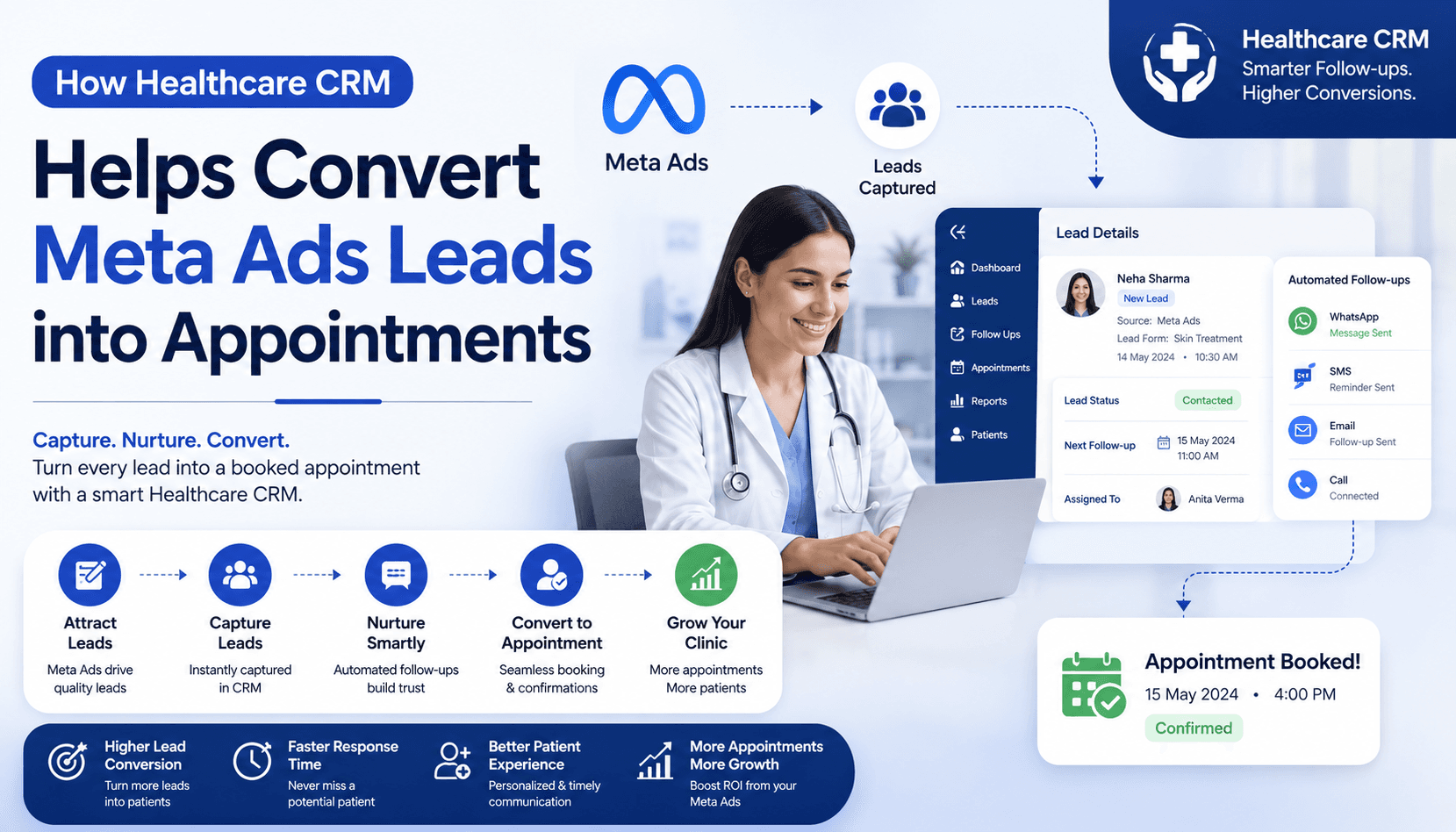
Running Meta Ads can bring a steady flow of healthcare leads. But getting a lead is only the first step.
A person may click an ad, fill out a form, and show interest in a treatment. Then the real challenge begins. Someone needs to contact the lead, understand their requirement, answer questions, and help them book an appointment.
If this process is slow or inconsistent, valuable leads can slip away.
This is where a healthcare CRM can make a difference. It connects lead capture, follow-ups, communication and appointment management in one system.
Why Meta Ads Leads Need More Than Lead Generation
Meta Ads can help clinics reach people based on interests, demographics, location and online behaviour. A campaign can generate dozens or even hundreds of enquiries.
But not every enquiry becomes an appointment.
Some leads may be ready to book immediately. Others may need more information. Some may not answer the first call. A few may respond after several days.
Managing these leads manually can become difficult.
Spreadsheets, WhatsApp chats, phone calls and separate lead forms can create gaps in the process. A lead may be contacted late or forgotten completely.
Healthcare CRM lead management brings these activities into one place.
The team can see where every lead came from, what action was taken and what needs to happen next.
What Happens After a Meta Lead Comes In?
A typical healthcare lead journey looks simple:
Meta Ad → Lead Form → Lead Capture → Follow-Up → Consultation Booking → Appointment
The problem is that each step can involve manual work.
A lead may submit a form at 11 PM. The sales or front-desk team may only see it the next morning. By then, the person may have contacted another clinic.
A CRM can shorten this gap.
Through Meta Ads CRM integration, new leads can be captured and routed into the CRM without relying on manual data entry.
The team can then act quickly while the enquiry is still fresh.
How Healthcare CRM Helps Convert Meta Ads Leads into Appointments
1. Captures Leads in One Place
Meta campaigns can generate leads across different campaigns, ad sets and forms.
A healthcare CRM can centralise these enquiries. Teams can access lead details through a single dashboard.
This reduces the need to check multiple platforms.
It also makes it easier to identify which campaign generated each enquiry.
2. Enables Faster Lead Follow-Ups
Speed matters in healthcare lead conversion.
A person enquiring about acne treatment, hair loss or a cosmetic procedure may be comparing several providers at the same time.
A CRM can notify the relevant team member when a new enquiry arrives. Leads can then be contacted sooner.
The goal is simple: reduce the time between enquiry and first response.
3. Automates Routine Follow-Ups
Not every lead will book after the first interaction.
Some may say they need time. Others may not answer the call. Some may ask for pricing or treatment details before deciding.
Healthcare CRM automation can help manage these follow-ups.
Teams can create reminders or automated workflows based on lead status.
For example:
New Lead → First Contact → Follow-Up Required → Interested → Appointment Booked
This creates a more organised process.
4. Keeps the Entire Lead History Accessible
A patient may speak to different members of the clinic team.
If each person has a different record of the conversation, the patient may have to repeat the same information.
Patient lead management software can maintain important interactions in one record.
The team can see previous calls, follow-up activity, lead source and appointment status.
This helps create a more consistent patient experience.
5. Helps Prioritise High-Intent Leads
Not every lead has the same level of intent.
Someone asking for an appointment today should not be treated exactly like someone casually enquiring about a treatment.
A clinic CRM software platform can help teams categorise leads based on their status, requirements and interactions.
This allows staff to focus their attention where it is most likely to lead to an appointment.
CRM for Clinic Leads Can Reduce Lead Leakage
Lead leakage is a common problem in clinics.
It happens when a potential patient enters the system but does not receive the right follow-up.
The reason may be simple:
The lead was not contacted.
The first call was missed.
Follow-up was delayed.
The lead was assigned to the wrong person.
No reminder was created.
The lead was lost in a spreadsheet or chat.
A CRM for clinic leads creates a structured workflow around these enquiries.
Instead of asking, “Did someone follow up?”, the team can check the lead record and see what happened.
Connecting Meta Ads Data With CRM Performance
Meta Ads can tell you how many leads a campaign generated.
But lead volume alone does not tell you if the campaign is actually helping the clinic grow.
A healthcare CRM can help connect marketing activity with sales outcomes.
For example, a clinic can track:
Leads generated by each campaign
Leads contacted
Leads qualified
Appointments booked
Follow-ups pending
Leads that did not convert
Conversion rates by source
This provides a clearer picture of healthcare lead conversion.
A campaign generating 500 leads may look impressive. But if only a small percentage become appointments, the campaign may need improvement.
Another campaign may generate fewer leads but produce more booked consultations.
CRM data helps reveal this difference.
How Automation Supports the Patient Journey
Automation should not replace human communication.
Healthcare decisions often require personal interaction. Patients may have questions about treatments, costs, downtime, suitability or expected results.
Automation can handle the repetitive parts of the process.
For example, a CRM can help trigger:
New enquiry: Lead assigned to a team member.
No response: Follow-up reminder created.
Interested lead: Next contact scheduled.
Appointment booked: Appointment status updated.
Missed appointment: Follow-up task created.
This gives the team a structured process without making communication feel mechanical.
What Should a Healthcare CRM Include?
The right patient lead management software should support more than basic contact storage.
Important capabilities can include:
Lead capture and management
Meta Ads CRM integration
Lead assignment
Automated follow-ups
Appointment tracking
Communication history
Lead status management
Performance dashboards
Conversion reporting
Workflow automation
The exact requirements will depend on the size and workflow of the clinic.
Choosing the Right Clinic CRM Software
A healthcare CRM should fit the way your clinic actually works.
Look for a system that is easy for your team to use. It should reduce manual work rather than create another layer of administration.
Integration is also important. Your CRM should connect with the platforms used to generate and manage leads.
Reporting matters too.
The team should be able to move beyond lead counts and understand what happens after a lead enters the system.
Turn More Meta Leads Into Real Appointments With Ledsak
Generating leads is only one part of digital healthcare marketing. The bigger opportunity lies in managing those leads properly after they arrive.
Ledsak helps bring lead management, follow-ups, communication, analytics and sales workflows into one platform.
Instead of managing enquiries across disconnected systems, clinics can create a more organised lead journey. Teams can track leads, automate routine follow-ups and monitor the actions that contribute to conversion.
If your clinic is investing in Meta Ads but losing potential patients between enquiry and appointment, it may be time to look beyond lead generation.
Explore Ledsak and build a more organised, conversion-focused healthcare lead management process.